
Meta Tags Generator
Generate SEO-friendly meta tags including Open Graph, Twitter Card, and canonical tags — copy-ready HTML with live preview.
This hub collects the most powerful free browser-based SEO tools to rank on Google in — covering every signal Google measures: metadata quality, keyword relevance, page speed, structured data, crawl health, and content readability — all zero signup.
Updated · Reviewed by The Free AI Tools Editorial Team — Google ranking and technical SEO tools review
Generate SEO-friendly meta tags including Open Graph, Twitter Card, and canonical tags — copy-ready HTML with live preview.
Preview title tags, URLs, and meta descriptions in a Google-style search result layout — SEO snippet tool.
Analyze repeated phrases and top keywords inside any text block — optimize content for search rankings.

Generate valid JSON-LD for articles, organizations, products, FAQs, and local businesses with instant preview and rule checks. It helps SEO teams ship structured data faster without copy-pasting uncertain snippets.

Create robots.txt files for your website — control search engine crawlers, disallow paths, and set sitemaps.

Generate XML sitemaps from a list of URLs — set priorities, change frequencies, and download instantly.
Estimate performance bottlenecks and Core Web Vitals from page metrics — lightweight Lighthouse simulator.

Create canonical link tags for pages, product variants, and paginated URLs — prevent duplicate content issues.

Estimate Flesch-Kincaid readability and sentence complexity from text — optimize content grade level instantly.

Turn page titles into clean, readable, SEO-friendly URL slugs — remove stop words and special characters.
Review meta descriptions for character length and snippet-friendly ranges — bulk SEO meta audit tool.
Audit pasted HTML for heading order, skipped levels, and document outline clarity — accessibility and SEO check.

Preview how Open Graph titles, descriptions, and images appear when shared on social media — OG tag tester.
Turn pasted URL and link-export data into a visual internal-link graph to spot orphaned pages, weak clusters, and overlinked nodes. It helps SEO teams plan site structure without sending crawl exports to an outside tool.
Visualize redirect chains from pasted crawl exports, response logs, or manually entered hops so teams can trim unnecessary redirects. This is useful during migrations, replatforms, and large-scale URL cleanup projects.

Check a list of URLs and mark timeout or fetch failures — find and fix 404 errors on your website.

Inspect pasted HTML for title, description, canonical, and social tags — audit any page's SEO meta structure.
Review image alt text for length, clarity, duplication, and decorative-image handling. It helps content teams write accessible image descriptions without relying on AI or third-party APIs.

Generate hreflang link tags for multilingual and multi-region sites — correct international SEO targeting.
Validate Twitter Card meta tags and preview card-style output — test X/Twitter link sharing appearance.

Assign sitemap priorities and change frequencies to a URL inventory — generate XML sitemap attributes.

Create consistent UTM URLs, validate naming conventions, and catch messy campaign tagging before links go live. It helps marketing teams keep analytics cleaner across channels and stakeholders.

Paraphrase and rewrite text using AI to sound natural, improve clarity, and bypass AI content detectors.
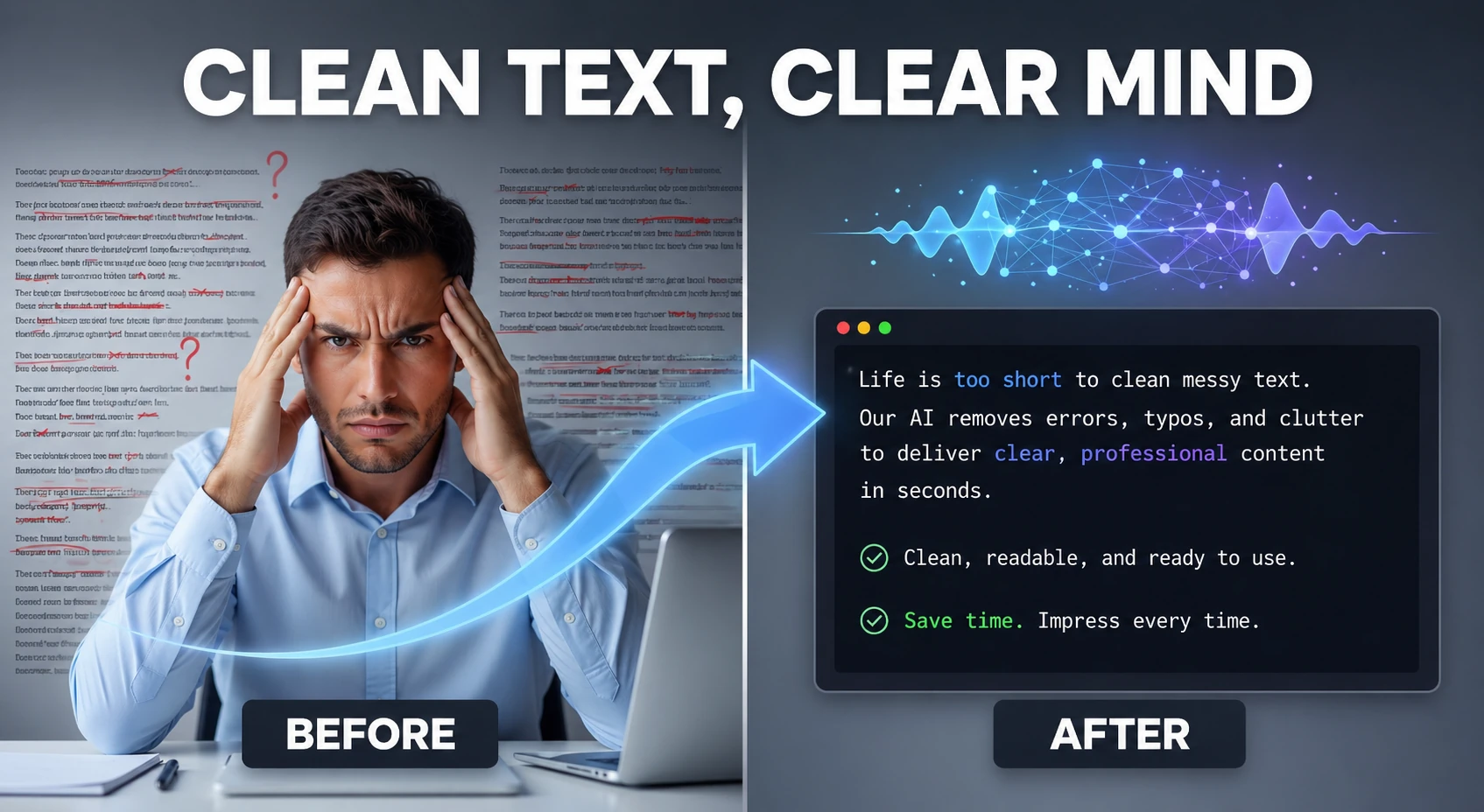
Clean and humanize AI-generated text to sound natural and help bypass AI detectors — powered by AI.
Detect robotic writing patterns and rewrite AI-generated text into a more natural, human-sounding draft — runs entirely in your browser.

Analyze text and estimate the likelihood it was generated by AI — detects ChatGPT, Claude, Gemini, and more using AI.

Count words, characters, sentences, and estimate reading time — with keyword density analysis.

Turn simple ideas into highly detailed, optimized prompts for Midjourney, ChatGPT, Stable Diffusion, Claude, and DALL-E using AI.

Create a visual SVG word cloud from any text input — great for content analysis, presentations, and data visualization.
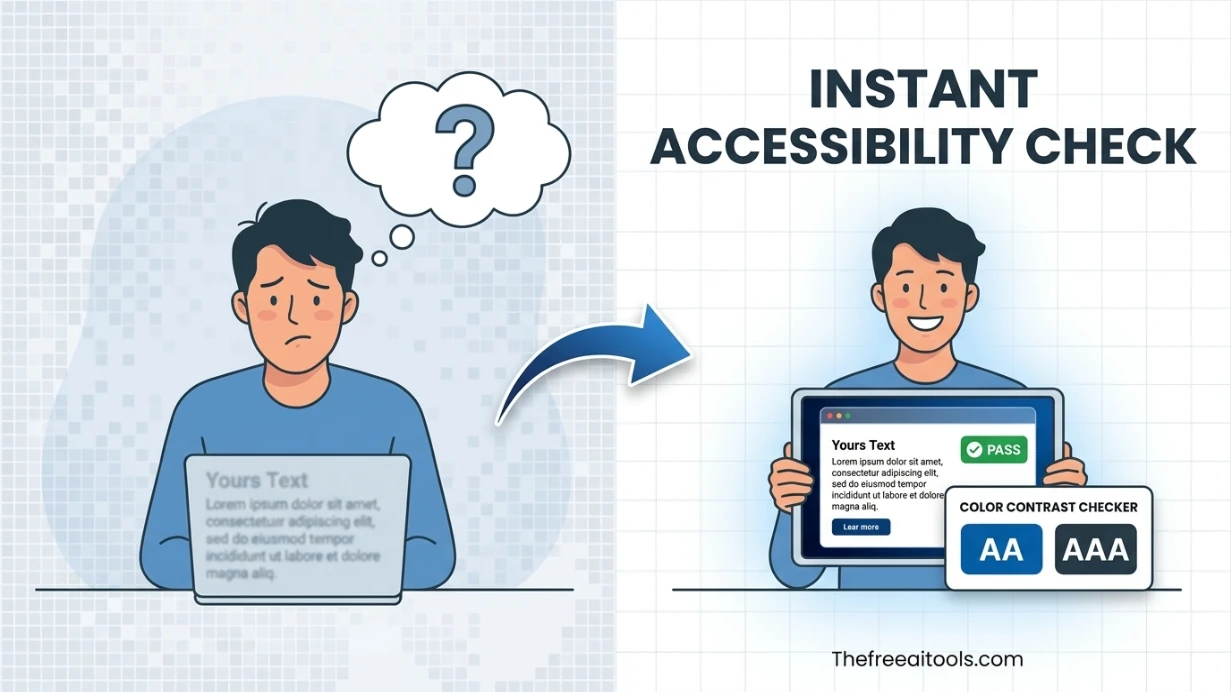
Check foreground and background color contrast against WCAG AA and AAA thresholds — accessibility audit tool.
Ranking on Google in 2026 is fundamentally a technical problem before it is a content problem. The most common reason well-written pages fail to rank is not that Google dislikes the content — it is that Google cannot correctly understand, index, or contextualize the page because of missing or incorrect technical SEO signals. Missing canonical tags cause ranking dilution. Incorrect robots.txt rules prevent indexation. Missing schema markup means no rich result eligibility. Unoptimized title tags reduce click-through rate, which suppresses rankings. Every one of these issues is fixable in minutes using the free tools on this hub.
Google's ranking algorithm in 2026 weights three signal categories above all others: relevance (does this page answer the query better than alternatives), authority (do other credible pages link to and reference this content), and experience (does the page load fast, display correctly, and present information accessibly). The tools in this hub directly address relevance signals — metadata accuracy, keyword density, heading structure, content readability — and experience signals — Core Web Vitals via the page speed simulator, accessibility via the contrast and alt text checkers. Authority signals come from backlinks, which these tools indirectly support by producing technically correct, shareable content.
Schema markup is the most underused Google ranking lever available to site owners in 2026. Pages with correctly implemented structured data earn rich result formats — FAQ dropdowns, star ratings, breadcrumb navigation, How-to steps, and event listings — that occupy more SERP real estate and earn dramatically higher click-through rates than standard blue-link results. The schema markup builder on this hub generates complete JSON-LD for every major schema type. A beginner who adds Article, FAQPage, and BreadcrumbList schema to their top pages this week will likely see SERP appearance improvements within two to four weeks.
Content quality signals — the factors Google uses to evaluate expertise, authoritativeness, and trustworthiness — are increasingly measurable with the tools in this hub. Keyword density that is too low signals that a page is not sufficiently focused on its target topic. Keyword density that is too high triggers over-optimization penalties. Readability scores that exceed the target grade level for the audience signal that content is unnecessarily difficult. The combination of keyword density checker and readability score calculator provides the two most actionable content quality metrics available without enterprise SEO tooling.
Quick answers about the workflow, privacy, and where this tool fits in a broader job.
The tools with the most direct impact on Google ranking are the meta tag generator for click-through rate, the schema markup builder for rich results eligibility, the robots.txt generator to ensure Google can crawl your pages, the sitemap generator for indexation coverage, and the page speed simulator for Core Web Vitals compliance.
New pages with correct metadata, schema markup, and crawl configuration typically appear in Google Search Console within 1-2 weeks and show initial ranking movement within 4-8 weeks. Established pages that fix technical issues often see ranking improvements within 2-4 weeks.
Yes — and often more reliably than publishing new content. Pages that are correctly indexed, have accurate metadata, pass Core Web Vitals, and include structured data consistently outrank technically broken pages on identical topics.
The SERP snippet preview combined with the meta tag generator has the highest direct impact: correctly optimized title tags and meta descriptions improve click-through rate from Google, which is a direct ranking signal. Higher CTR at the same position leads to higher ranking.
No. The tools in this hub cover every technical SEO requirement that Google measures — metadata, crawl configuration, page speed, structured data, and content quality — entirely for free in your browser.
The complete toolkit
Every tool runs instantly in your browser — no account, no download, no cost. Across 13 categories for everyday tasks.