
AI Paraphrasing Tool
Paraphrase and rewrite text using AI to sound natural, improve clarity, and bypass AI content detectors.
This hub collects the best free AI-powered tools for Google Ads and paid search campaigns in — covering ad copy generation, headline optimization, landing page SEO, UTM tracking, CTA writing, and quality score improvement — all browser-based with zero signup.
Updated · Reviewed by The Free AI Tools Editorial Team — Google Ads, PPC, and paid search AI tools review
Paraphrase and rewrite text using AI to sound natural, improve clarity, and bypass AI content detectors.
Turn simple ideas into highly detailed, optimized prompts for Midjourney, ChatGPT, Stable Diffusion, Claude, and DALL-E using AI.
Clean and humanize AI-generated text to sound natural and help bypass AI detectors — powered by AI.
Detect robotic writing patterns and rewrite AI-generated text into a more natural, human-sounding draft — runs entirely in your browser.

Analyze text and estimate the likelihood it was generated by AI — detects ChatGPT, Claude, Gemini, and more using AI.

Generate SEO-friendly meta tags including Open Graph, Twitter Card, and canonical tags — copy-ready HTML with live preview.
Review meta descriptions for character length and snippet-friendly ranges — bulk SEO meta audit tool.
Preview title tags, URLs, and meta descriptions in a Google-style search result layout — SEO snippet tool.
Turn page titles into clean, readable, SEO-friendly URL slugs — remove stop words and special characters.

Create consistent UTM URLs, validate naming conventions, and catch messy campaign tagging before links go live. It helps marketing teams keep analytics cleaner across channels and stakeholders.
Analyze repeated phrases and top keywords inside any text block — optimize content for search rankings.
Estimate Flesch-Kincaid readability and sentence complexity from text — optimize content grade level instantly.
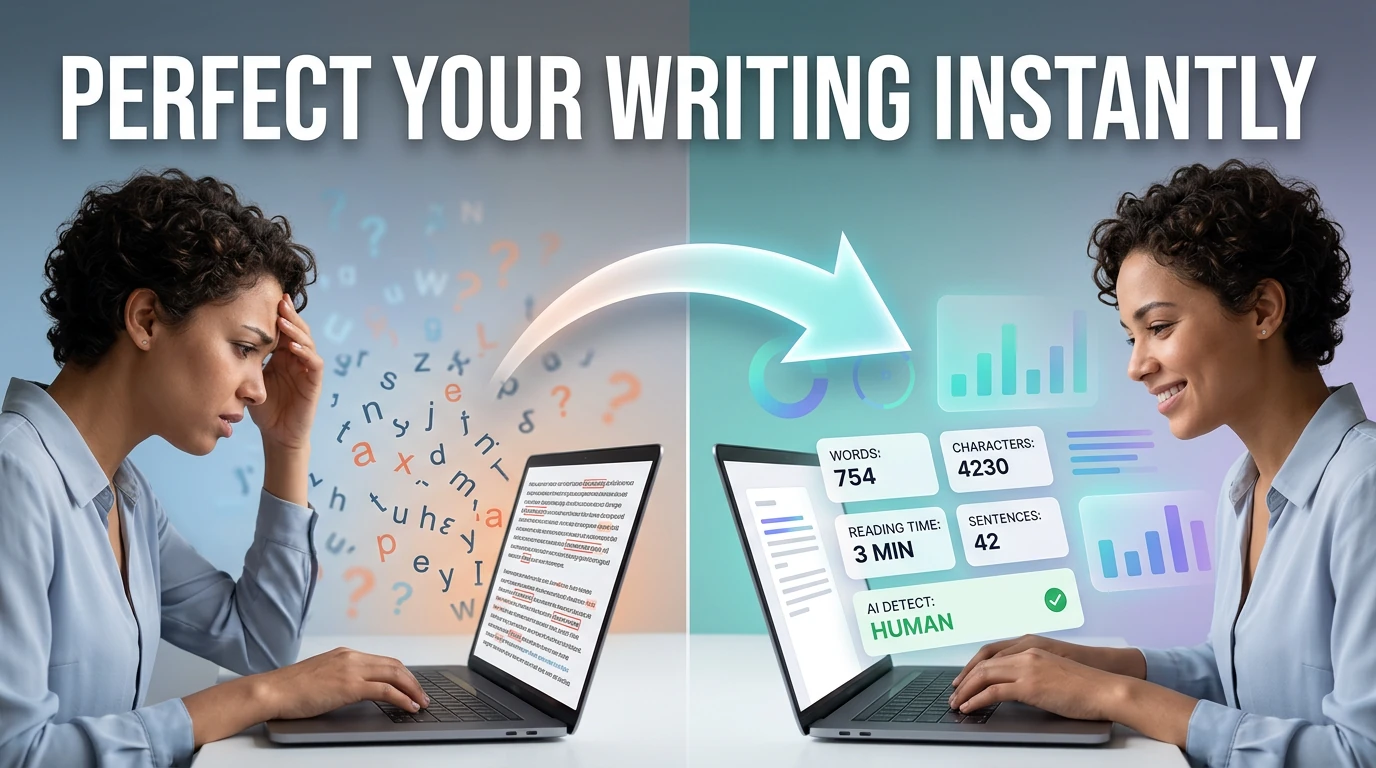
Count words, characters, sentences, and estimate reading time — with keyword density analysis.

Preview how Open Graph titles, descriptions, and images appear when shared on social media — OG tag tester.
Estimate performance bottlenecks and Core Web Vitals from page metrics — lightweight Lighthouse simulator.

Generate valid JSON-LD for articles, organizations, products, FAQs, and local businesses with instant preview and rule checks. It helps SEO teams ship structured data faster without copy-pasting uncertain snippets.

Create canonical link tags for pages, product variants, and paginated URLs — prevent duplicate content issues.
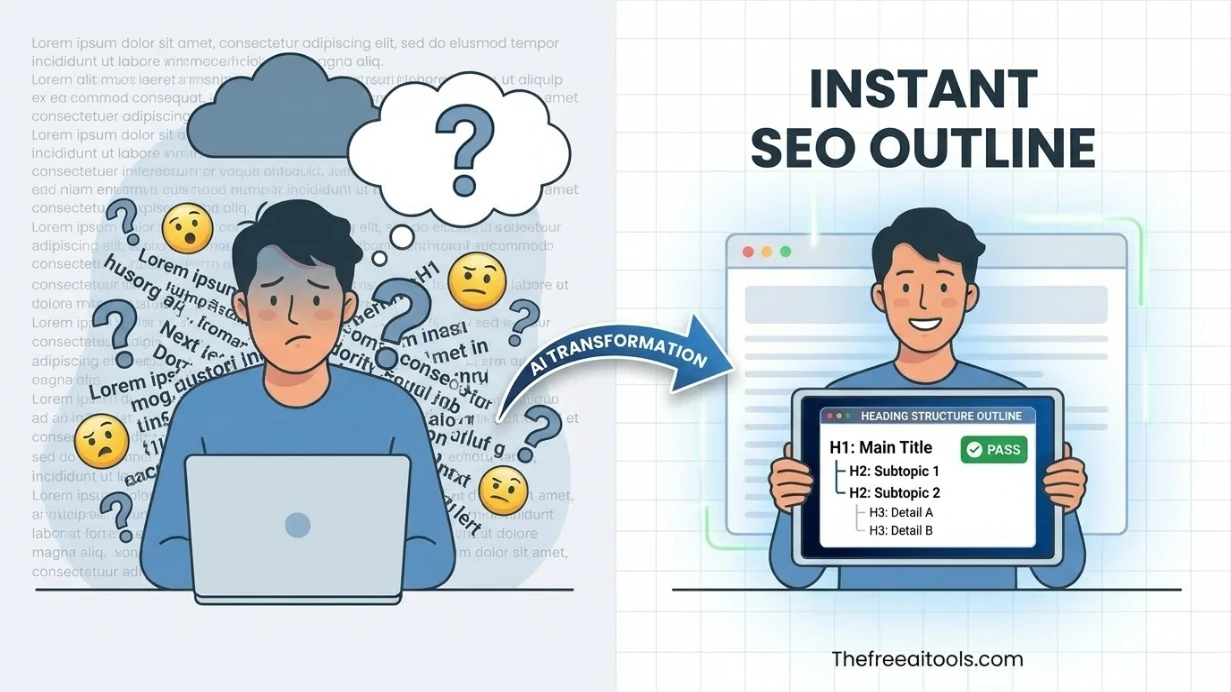
Audit pasted HTML for heading order, skipped levels, and document outline clarity — accessibility and SEO check.
Generate captivating short stories, novel chapters, and fanfiction using AI — choose genre and let AI write the rest.
Compare two blocks of text and highlight additions and removals — visualize code and content changes instantly.
Google Ads in 2026 operates on a Quality Score system that rewards ad copy and landing page relevance above bid amount — meaning that well-written, keyword-relevant ads consistently outperform higher-budget competitors with generic copy. The AI tools in this hub address the three quality dimensions Google measures: expected click-through rate (improved by compelling headline and CTA writing), ad relevance (improved by keyword-dense, specific copy), and landing page experience (improved by fast, readable, keyword-aligned pages). Getting all three right produces the Quality Score that unlocks top ad positions at lower cost per click.
Ad copy volume is the practical challenge of Google Ads management in 2026. Responsive Search Ads accept up to fifteen headlines and four descriptions per ad, and Google's algorithm tests combinations to find top performers. Most advertisers submit five headlines and two descriptions — leaving Google with insufficient variation to optimize effectively. The AI paraphrasing tool on this hub solves this volume problem: generate one strong headline, run it through the paraphraser to produce ten semantic variations, verify each fits within the 30-character limit, and submit the full fifteen to Google for algorithmic testing.
Landing page alignment with ad copy is the Quality Score factor most overlooked by Google Ads managers. A compelling ad that directs users to a landing page that does not reflect the ad's keyword intent produces high bounce rates that Google interprets as low landing page relevance. The keyword density checker on this hub lets managers verify that landing page content matches the primary keyword from the ad group — ensuring the topical signal flowing from search query to ad to landing page is consistent throughout the user journey.
UTM parameter management is the operational discipline that separates data-driven Google Ads management from guesswork. Without correctly formatted UTM parameters on every ad URL, conversions from Google Ads report as direct traffic in Google Analytics — making it impossible to attribute revenue to specific campaigns, ad groups, or keywords. The UTM builder and validator on this hub generates correctly formatted tracking URLs and checks existing tagged URLs for parameter errors that would break attribution — a five-minute check that protects the entire analytics dataset.
Quick answers about the workflow, privacy, and where this tool fits in a broader job.
AI tools improve Google Ads performance by generating multiple headline and description variations quickly, optimizing copy for relevance to target keywords, improving landing page content quality score signals, and producing CTA language tested across different audience intents. Higher copy relevance directly reduces CPC and improves Quality Score.
The AI paraphrasing tool generates varied headline alternatives from a single concept, while the meta description length checker ensures responsive search ad headlines stay within Google's 30-character limit. Use the SERP snippet preview to see how your headlines will appear in search results before launching.
UTM parameters appended to Google Ads landing page URLs attribute ad traffic correctly in Google Analytics, allowing you to compare ad traffic behavior against organic traffic and measure true cost-per-conversion by campaign, ad group, and keyword.
Google's Quality Score algorithm evaluates landing page relevance and experience alongside expected CTR and ad relevance. A landing page with strong keyword density matching the ad's target term, fast page speed, and clear CTA structure earns higher Quality Scores, which directly reduces CPC and improves ad position.
Yes. The AI paraphrasing tool generates alternative CTA phrasings from a base concept, the text humanizer removes mechanical-sounding language from AI-generated CTAs, and the word counter ensures CTAs fit within character limits for responsive search ads.
The complete toolkit
Every tool runs instantly in your browser — no account, no download, no cost. Across 13 categories for everyday tasks.