
Meta Tags Generator
Generate SEO-friendly meta tags including Open Graph, Twitter Card, and canonical tags — copy-ready HTML with live preview.
This hub is designed for SEO beginners in — collecting the simplest, most impactful free browser-based tools that anyone can use to improve their website's search performance without technical experience, paid subscriptions, or complicated setups.
Updated · Reviewed by The Free AI Tools Editorial Team — Beginner SEO education and tools review
Generate SEO-friendly meta tags including Open Graph, Twitter Card, and canonical tags — copy-ready HTML with live preview.
Preview title tags, URLs, and meta descriptions in a Google-style search result layout — SEO snippet tool.

Turn page titles into clean, readable, SEO-friendly URL slugs — remove stop words and special characters.

Create robots.txt files for your website — control search engine crawlers, disallow paths, and set sitemaps.

Generate XML sitemaps from a list of URLs — set priorities, change frequencies, and download instantly.
Analyze repeated phrases and top keywords inside any text block — optimize content for search rankings.

Estimate Flesch-Kincaid readability and sentence complexity from text — optimize content grade level instantly.
Review meta descriptions for character length and snippet-friendly ranges — bulk SEO meta audit tool.

Preview how Open Graph titles, descriptions, and images appear when shared on social media — OG tag tester.

Create canonical link tags for pages, product variants, and paginated URLs — prevent duplicate content issues.
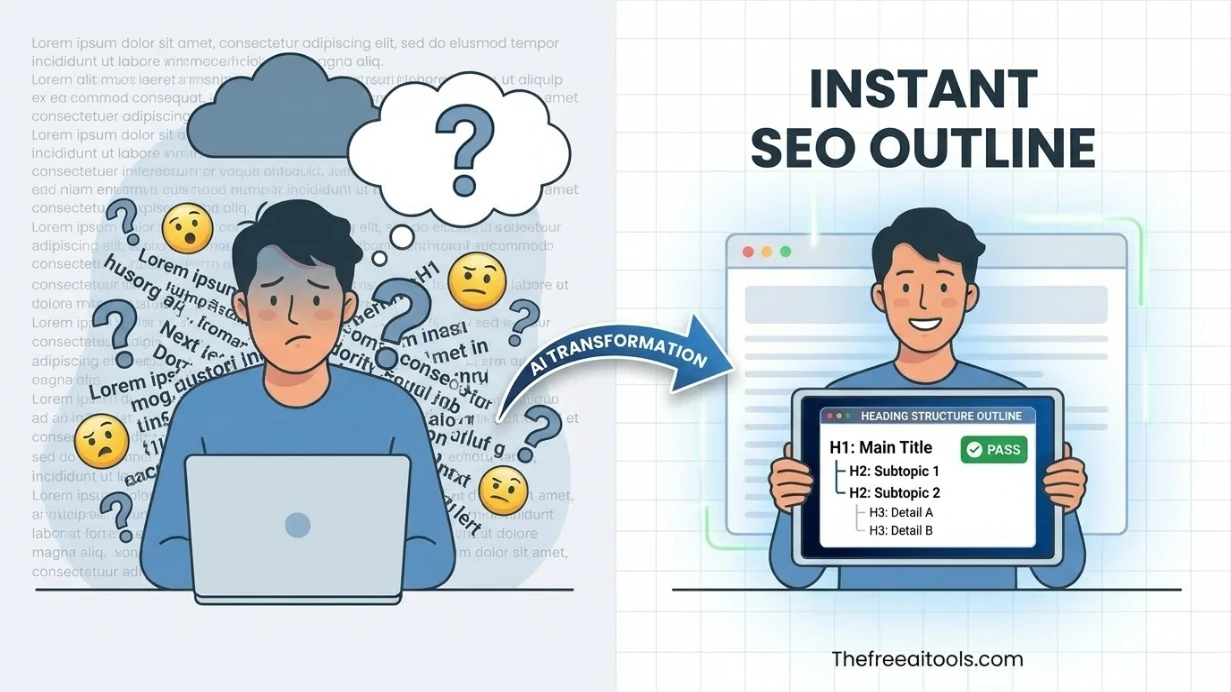
Audit pasted HTML for heading order, skipped levels, and document outline clarity — accessibility and SEO check.
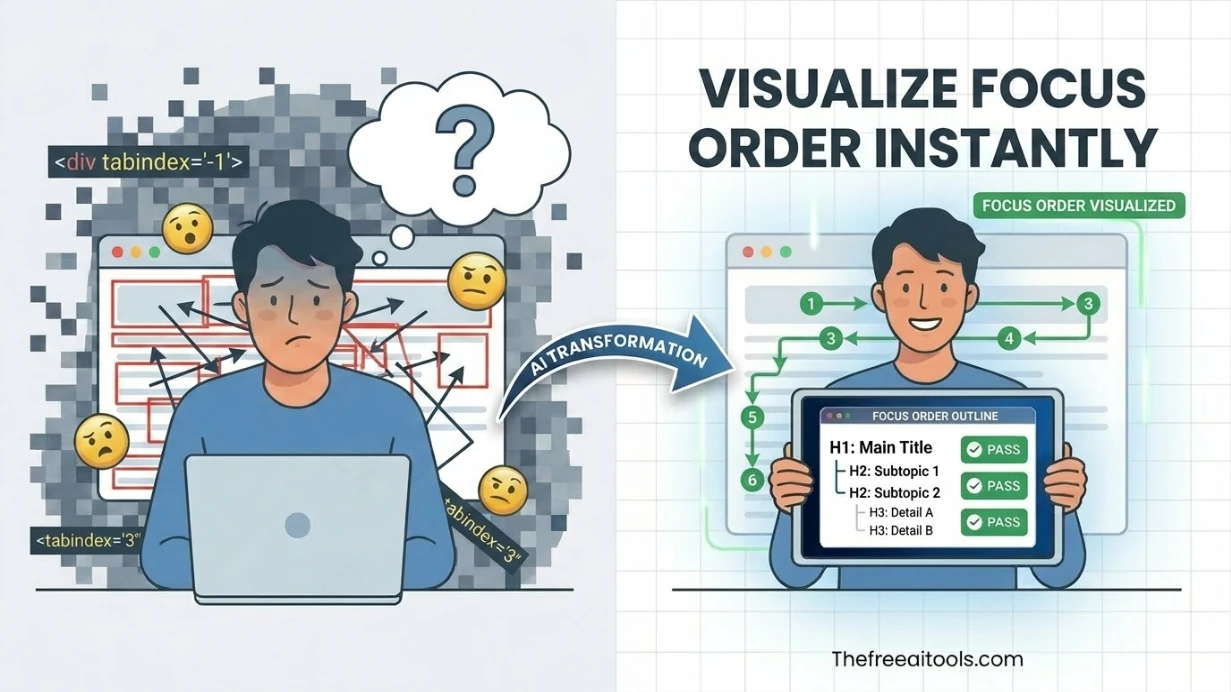
Review image alt text for length, clarity, duplication, and decorative-image handling. It helps content teams write accessible image descriptions without relying on AI or third-party APIs.

Count words, characters, sentences, and estimate reading time — with keyword density analysis.

Paraphrase and rewrite text using AI to sound natural, improve clarity, and bypass AI content detectors.
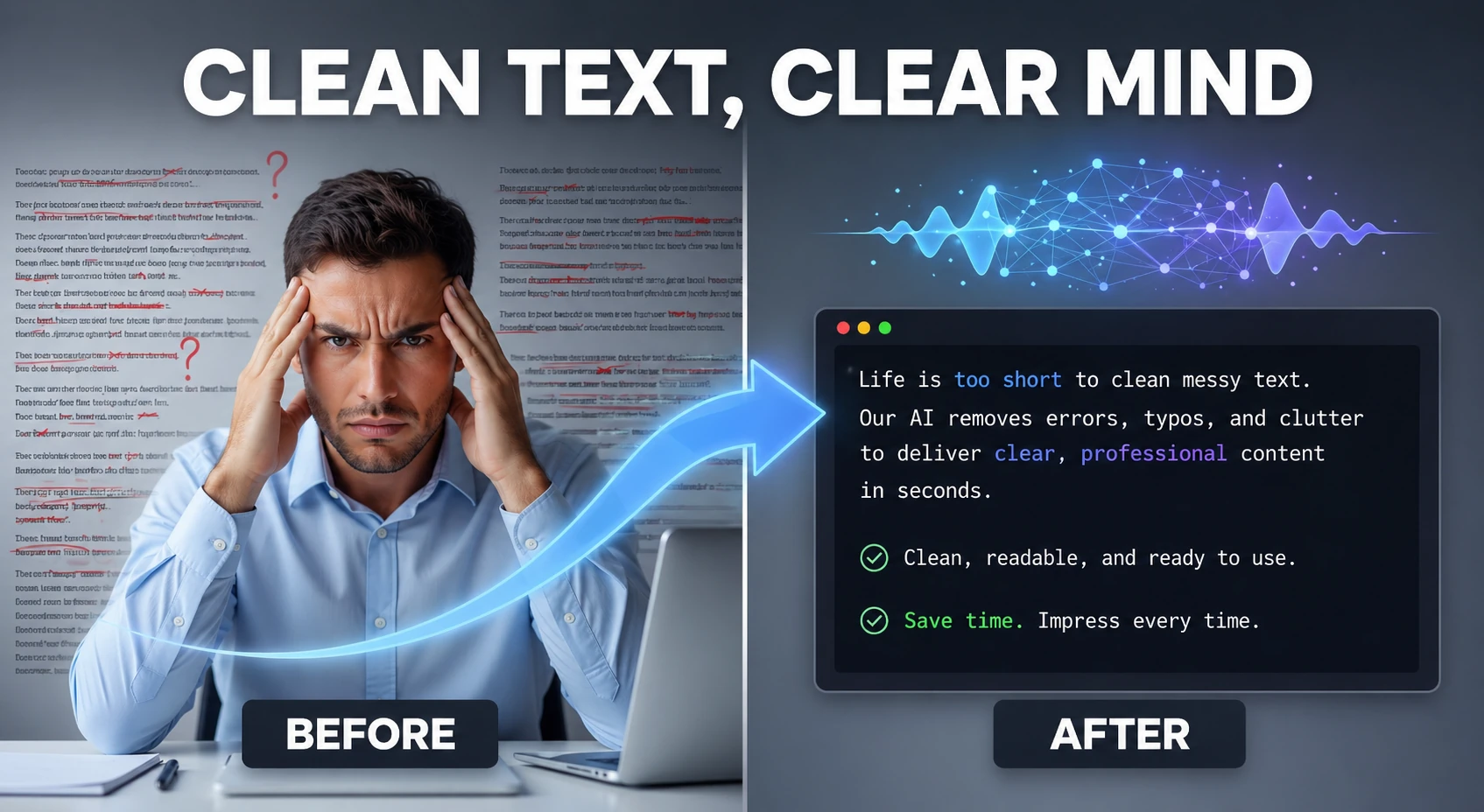
Clean and humanize AI-generated text to sound natural and help bypass AI detectors — powered by AI.
Detect robotic writing patterns and rewrite AI-generated text into a more natural, human-sounding draft — runs entirely in your browser.

Generate valid JSON-LD for articles, organizations, products, FAQs, and local businesses with instant preview and rule checks. It helps SEO teams ship structured data faster without copy-pasting uncertain snippets.

Check a list of URLs and mark timeout or fetch failures — find and fix 404 errors on your website.

Create consistent UTM URLs, validate naming conventions, and catch messy campaign tagging before links go live. It helps marketing teams keep analytics cleaner across channels and stakeholders.
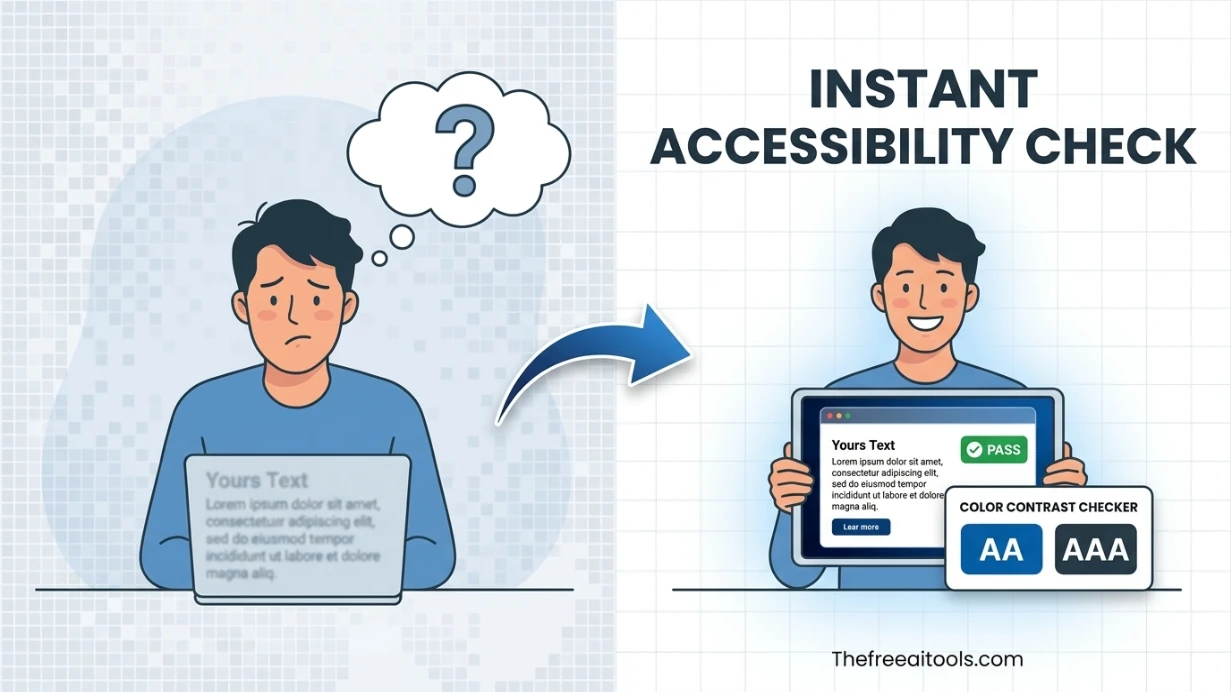
Check foreground and background color contrast against WCAG AA and AAA thresholds — accessibility audit tool.
Validate Twitter Card meta tags and preview card-style output — test X/Twitter link sharing appearance.

Create a visual SVG word cloud from any text input — great for content analysis, presentations, and data visualization.

Convert plain text to formatted PDF documents with customizable page size — free, no software required.

Turn simple ideas into highly detailed, optimized prompts for Midjourney, ChatGPT, Stable Diffusion, Claude, and DALL-E using AI.
SEO for beginners in 2026 is both simpler and more competitive than it was five years ago. Simpler because the tools are better, the documentation is clearer, and AI assistance removes many technical barriers. More competitive because AI content has raised the volume of published pages, making technical correctness a stronger differentiator than ever. A beginner who implements correct metadata, clean crawl files, and basic schema markup from day one will outperform established sites that have accumulated years of technical debt — not because they have more resources, but because they have fewer mistakes.
The beginner SEO learning path on this hub is designed around immediate, visible feedback loops. The SERP snippet preview shows beginners exactly how their page looks in Google before it ever ranks — which makes the abstract concept of 'metadata' immediately tangible and actionable. The keyword density checker shows whether a page is actually communicating its topic clearly, not just to the author but to an algorithm. The readability tool scores the content against grade-level standards, revealing whether the writing is accessible to the intended audience. These feedback loops accelerate learning because every optimization has a visible, measurable output.
Schema markup is the beginner SEO task with the highest difficulty-to-reward ratio in 2026. It sounds technical — JSON-LD, schema.org, structured data — but the schema markup builder on this hub generates complete, copy-paste-ready code without requiring any JSON knowledge. A beginner who adds FAQPage schema to their how-to articles and Article schema to their blog posts can earn rich SERP features — larger search result displays with FAQ dropdowns and enhanced formatting — that experienced SEO professionals pay thousands of dollars to achieve through complex CMS implementations.
The most important mindset shift for SEO beginners in 2026 is treating SEO as a publishing workflow, not a one-time project. The most successful SEO beginners are those who build a pre-publish checklist — metadata, keyword density, readability, social preview, schema — and run every piece of content through it before publishing. The tools in this hub are designed to be that checklist. Bookmarking this page and spending five minutes on SEO checks before each publish will produce compounding ranking improvements that no one-time optimization project can match.
Quick answers about the workflow, privacy, and where this tool fits in a broader job.
Start with three fundamentals: the meta tag generator to write correct title tags and descriptions, the SERP snippet preview to see how your pages appear in Google, and the robots.txt generator to confirm you are not accidentally blocking search engines from your site. These three tools address the most common beginner SEO mistakes.
No. Every tool on this hub is designed for non-technical users. You enter information — a page title, a URL, your article text — and the tool generates the correct output. No programming knowledge is required for any tool listed here.
Technical SEO corrections — fixing metadata, adding schema markup, correcting robots.txt — can produce visible ranking changes within 2-4 weeks for new pages. Content optimization improvements typically show results within 4-8 weeks depending on your site's crawl frequency.
The meta tag generator. Writing correct, keyword-optimized title tags and meta descriptions for every page is the most direct action a beginner can take to improve organic search click-through rates. It costs nothing and takes minutes per page.
Absolutely. Organic search traffic is still the highest-ROI digital marketing channel for most websites. Learning foundational SEO — metadata, crawl configuration, content quality, and basic structured data — gives any website owner a durable competitive advantage that compounds over time.
The complete toolkit
Every tool runs instantly in your browser — no account, no download, no cost. Across 13 categories for everyday tasks.