
Meta Tags Generator
Generate SEO-friendly meta tags including Open Graph, Twitter Card, and canonical tags — copy-ready HTML with live preview.
This hub collects the best free browser-based SEO tools for static HTML website owners and developers in — generating ready-to-paste metadata, crawl files, structured data, and validation tools that work directly in any plain HTML page — zero signup.
Updated · Reviewed by The Free AI Tools Editorial Team — Static HTML and web fundamentals SEO review
Generate SEO-friendly meta tags including Open Graph, Twitter Card, and canonical tags — copy-ready HTML with live preview.

Create robots.txt files for your website — control search engine crawlers, disallow paths, and set sitemaps.

Generate XML sitemaps from a list of URLs — set priorities, change frequencies, and download instantly.

Create canonical link tags for pages, product variants, and paginated URLs — prevent duplicate content issues.

Generate valid JSON-LD for articles, organizations, products, FAQs, and local businesses with instant preview and rule checks. It helps SEO teams ship structured data faster without copy-pasting uncertain snippets.

Preview how Open Graph titles, descriptions, and images appear when shared on social media — OG tag tester.

Validate Twitter Card meta tags and preview card-style output — test X/Twitter link sharing appearance.

Preview title tags, URLs, and meta descriptions in a Google-style search result layout — SEO snippet tool.

Turn page titles into clean, readable, SEO-friendly URL slugs — remove stop words and special characters.

Review meta descriptions for character length and snippet-friendly ranges — bulk SEO meta audit tool.
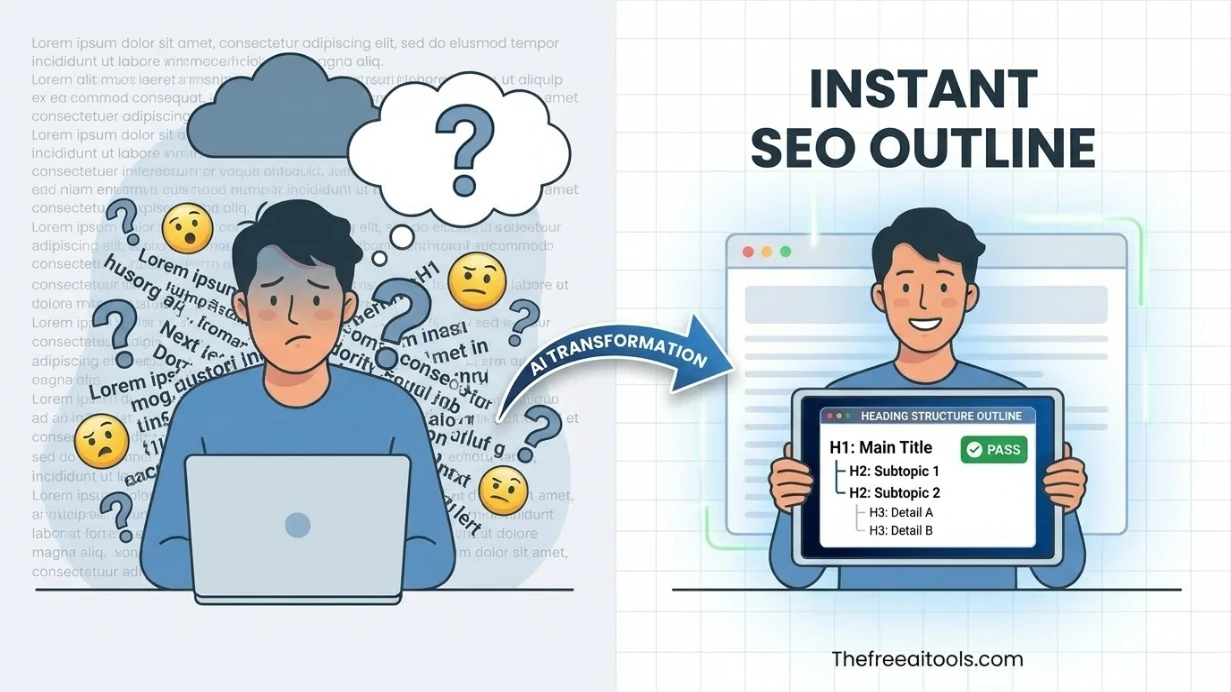
Audit pasted HTML for heading order, skipped levels, and document outline clarity — accessibility and SEO check.

Review image alt text for length, clarity, duplication, and decorative-image handling. It helps content teams write accessible image descriptions without relying on AI or third-party APIs.

Analyze repeated phrases and top keywords inside any text block — optimize content for search rankings.

Estimate Flesch-Kincaid readability and sentence complexity from text — optimize content grade level instantly.

Turn pasted URL and link-export data into a visual internal-link graph to spot orphaned pages, weak clusters, and overlinked nodes. It helps SEO teams plan site structure without sending crawl exports to an outside tool.

Visualize redirect chains from pasted crawl exports, response logs, or manually entered hops so teams can trim unnecessary redirects. This is useful during migrations, replatforms, and large-scale URL cleanup projects.
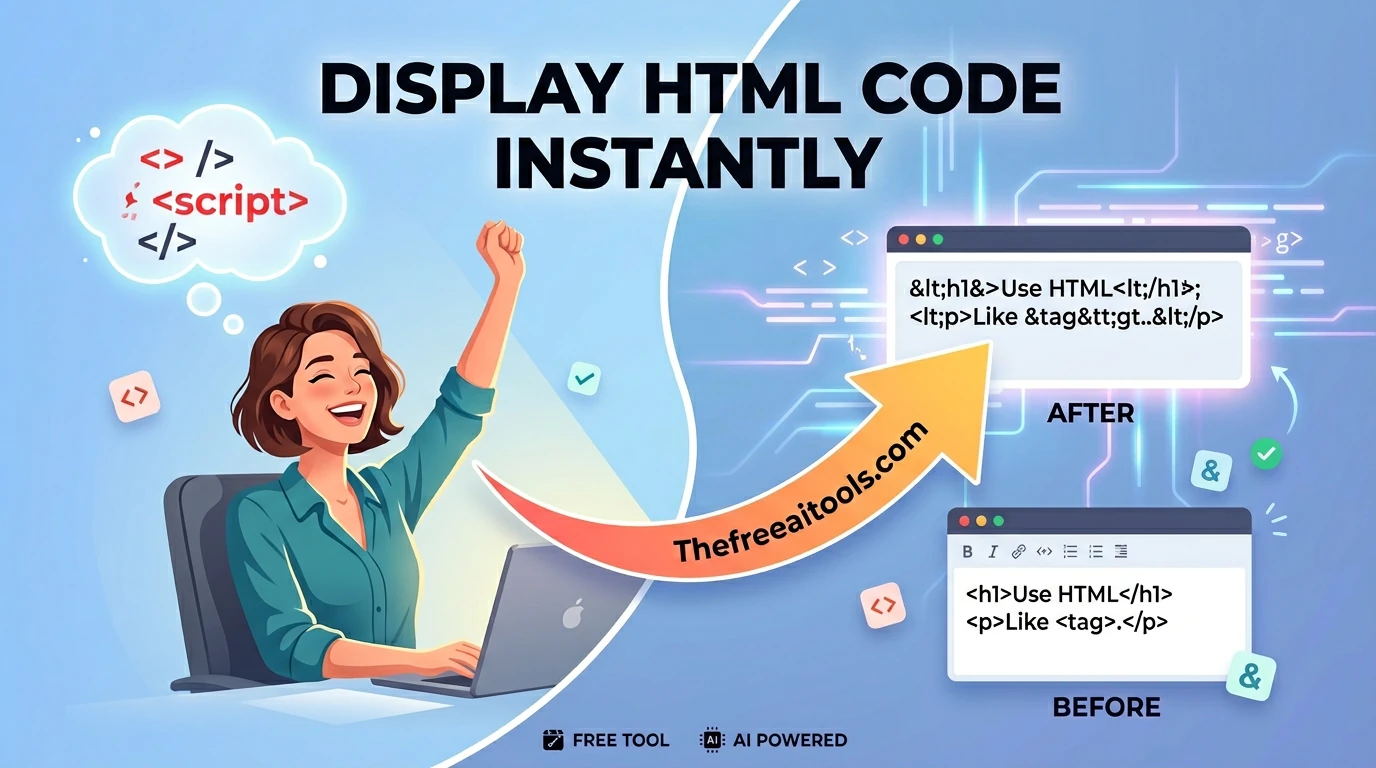
Convert special characters to and from HTML entities — prevent XSS and fix broken markup instantly.

Render markdown into clean sanitized HTML with a live preview — convert .md files to web-ready markup.

Minify or beautify CSS code for production optimization or readable development — instant browser-side processing.

Minify or beautify JavaScript code for production builds or debugging — reduce JS bundle size instantly.
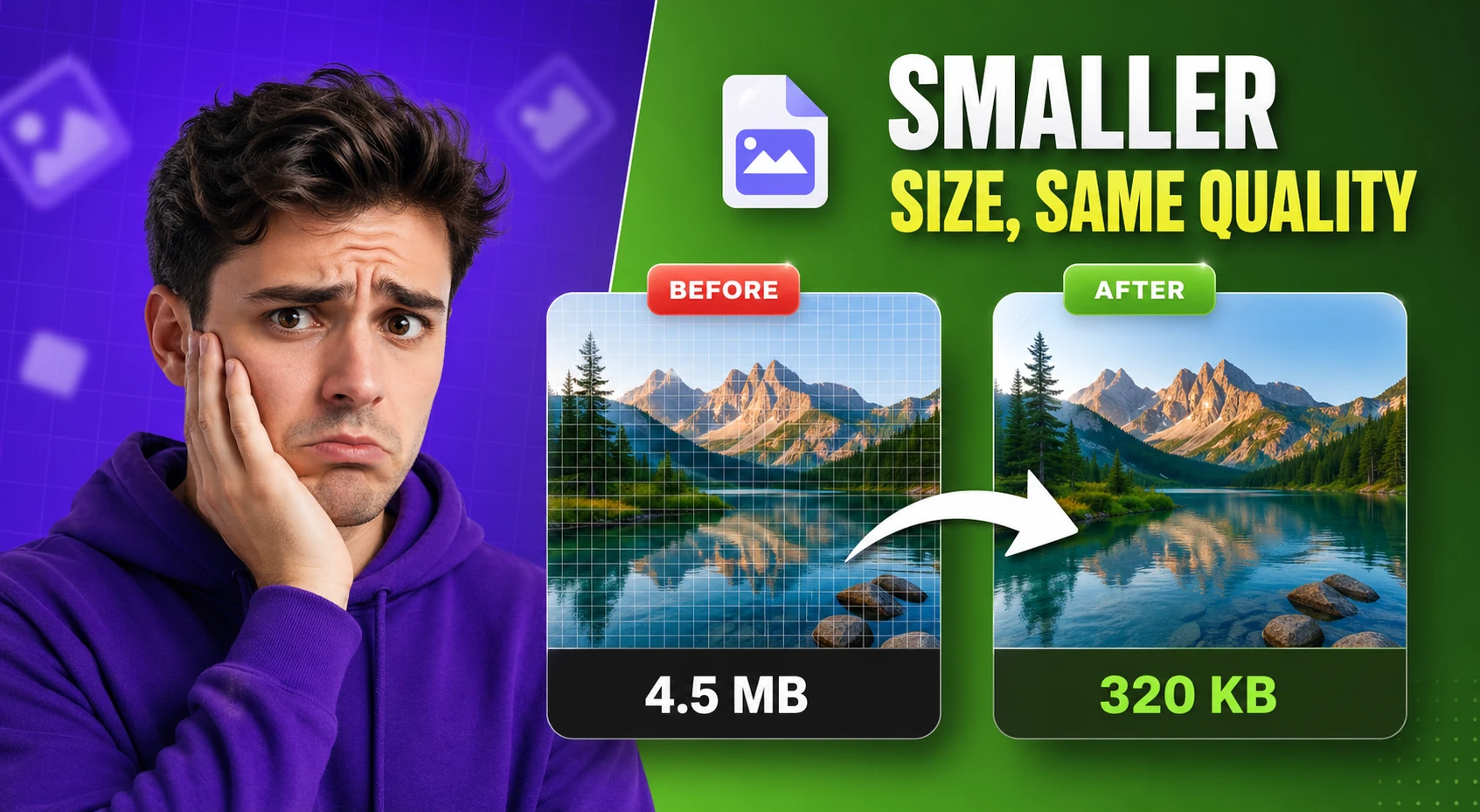
Compress and optimize images with adjustable quality and live preview — reduce file size for faster web performance.

Generate multi-size favicon assets from an uploaded source image — download ICO, PNG, and Apple touch icon formats.

Check SSL certificate validity, expiry, and HTTPS status for any domain — essential web security audit tool.

Estimate performance bottlenecks and Core Web Vitals from page metrics — lightweight Lighthouse simulator.
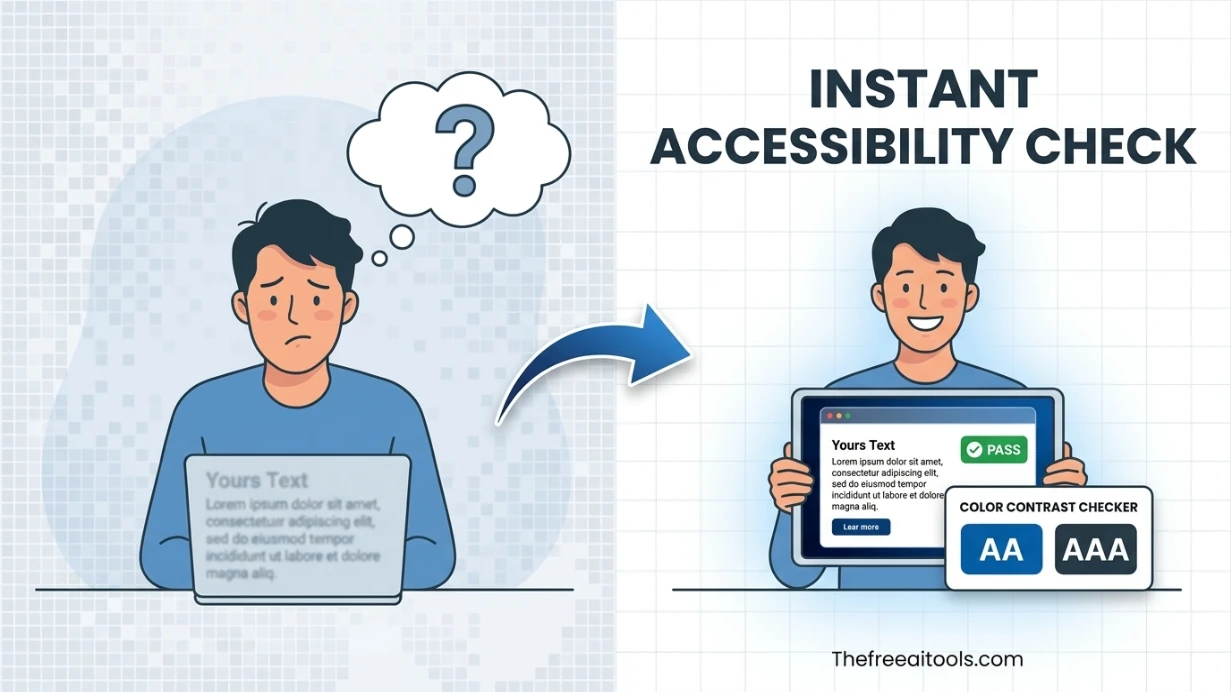
Check foreground and background color contrast against WCAG AA and AAA thresholds — accessibility audit tool.
Static HTML websites in 2026 enjoy a significant technical SEO advantage that is frequently overlooked in discussions dominated by CMS platforms and JavaScript frameworks. A plain HTML page loads faster, requires no server-side processing, has no plugin or extension conflicts, and is trivially crawlable by Googlebot without JavaScript execution. These intrinsic performance characteristics translate directly into better Core Web Vitals scores and more reliable indexation — technical signals that Google weights heavily in 2026's ranking algorithm.
The primary SEO challenge for static HTML sites is not technical performance — it is metadata completeness and correctness. HTML pages cannot rely on a CMS plugin to generate meta tags, Open Graph properties, canonical tags, or schema markup automatically. Every SEO element must be hand-coded into each page. The meta tag generator, Open Graph preview, schema markup builder, and canonical tag generator on this hub produce ready-to-paste HTML and JSON-LD that can be inserted directly into any static HTML file without modification.
Sitemap generation and maintenance is the operational SEO challenge that scales worst with static HTML sites. A CMS updates its sitemap automatically when content is added or removed. A static HTML site requires manual sitemap updates every time a page is added, removed, or relocated. The sitemap generator produces correctly formatted XML that HTML site owners can maintain by updating the URL list whenever the site structure changes — keeping the sitemap accurate without server-side automation.
Performance optimization for static HTML sites centers on asset optimization — the area where the most gains are available with the least development effort. The CSS minifier, JS minifier, and image compressor on this hub provide browser-based optimization for the three largest asset categories on most HTML sites. Minifying CSS and JavaScript files, and compressing images to WebP format before referencing them in HTML, reduces total page weight dramatically with direct improvements to Largest Contentful Paint and Cumulative Layout Shift scores.
Quick answers about the workflow, privacy, and where this tool fits in a broader job.
Every HTML page needs a title tag, meta description, canonical tag, robots meta directive, and Open Graph tags at minimum. Use the meta tag generator on this hub to produce the complete head section HTML for any page.
Add the JSON-LD generated by the schema markup builder as a script tag with type='application/ld+json' in the head section of your HTML page. No CMS or framework is required — it works in plain HTML files.
Yes. Static HTML pages load faster than dynamically rendered pages, require no JavaScript execution for Googlebot to read their content, and have no CMS-introduced canonical or redirect complexity. These technical advantages translate directly to better Core Web Vitals scores and more reliable crawling.
Use the CSS minifier and JS minifier on this hub to compress your stylesheets and scripts. Paste your code, copy the minified output, and replace the source files — typically reducing file size by 30-60% with no impact on functionality.
The favicon generator creates all required favicon sizes — 16x16, 32x32, 180x180 Apple touch icon — from a single source image and outputs the correct HTML link tags to paste into your HTML head section.
The complete toolkit
Every tool runs instantly in your browser — no account, no download, no cost. Across 13 categories for everyday tasks.