
Schema Markup Builder & Validator
Generate valid JSON-LD for articles, organizations, products, FAQs, and local businesses with instant preview and rule checks. It helps SEO teams ship structured data faster without copy-pasting uncertain snippets.
This hub collects the best free browser-based tools for local SEO in — helping small businesses, agencies, and multi-location brands optimize for local search results, Google Business Profile, and map pack rankings — no signup required.
Updated · Reviewed by The Free AI Tools Editorial Team — Local SEO tools and structured data review
Generate valid JSON-LD for articles, organizations, products, FAQs, and local businesses with instant preview and rule checks. It helps SEO teams ship structured data faster without copy-pasting uncertain snippets.

Generate SEO-friendly meta tags including Open Graph, Twitter Card, and canonical tags — copy-ready HTML with live preview.
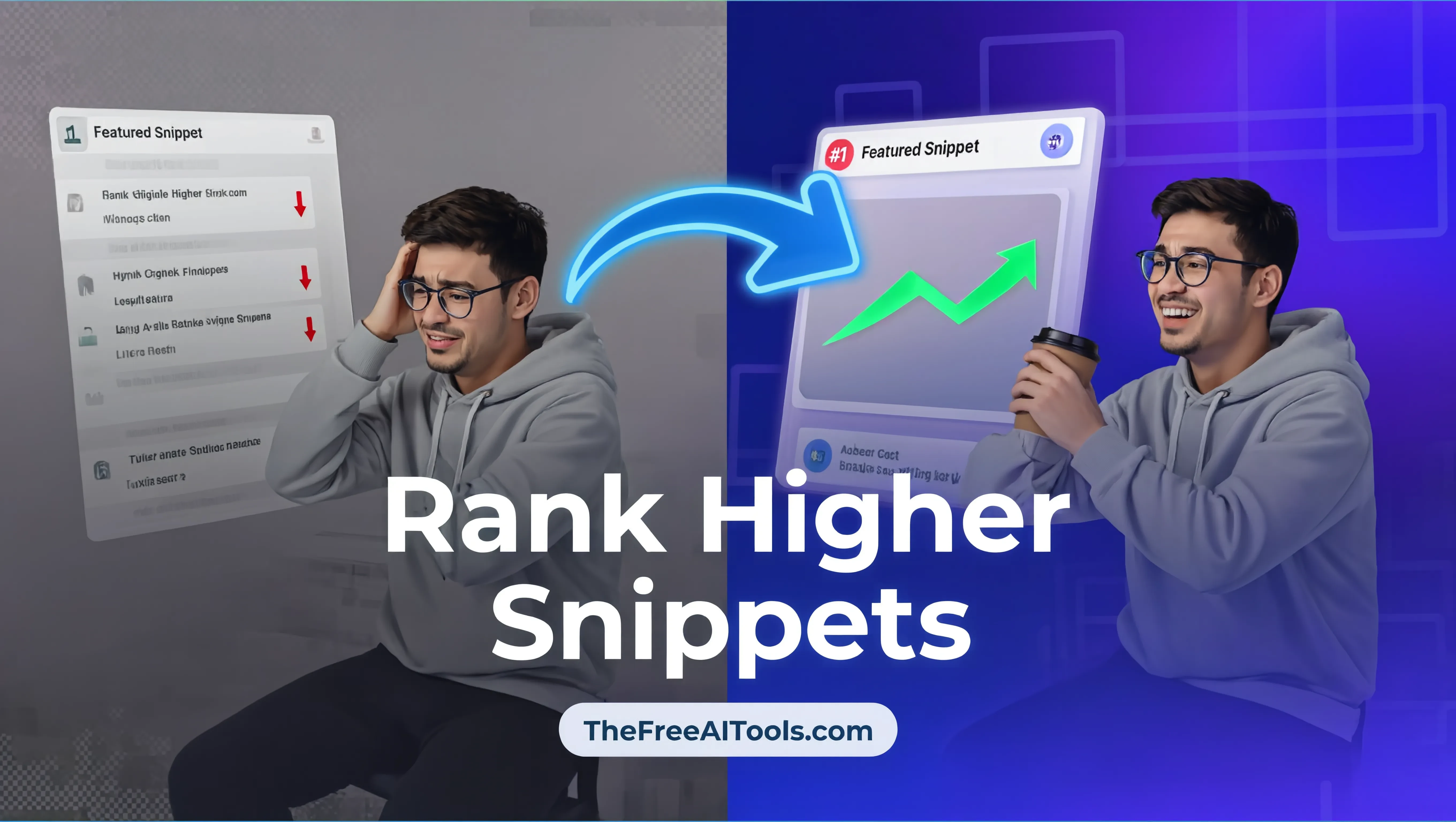
Preview title tags, URLs, and meta descriptions in a Google-style search result layout — SEO snippet tool.

Review meta descriptions for character length and snippet-friendly ranges — bulk SEO meta audit tool.

Generate hreflang link tags for multilingual and multi-region sites — correct international SEO targeting.

Create canonical link tags for pages, product variants, and paginated URLs — prevent duplicate content issues.
Create robots.txt files for your website — control search engine crawlers, disallow paths, and set sitemaps.

Generate XML sitemaps from a list of URLs — set priorities, change frequencies, and download instantly.

Assign sitemap priorities and change frequencies to a URL inventory — generate XML sitemap attributes.

Turn page titles into clean, readable, SEO-friendly URL slugs — remove stop words and special characters.

Preview how Open Graph titles, descriptions, and images appear when shared on social media — OG tag tester.

Analyze repeated phrases and top keywords inside any text block — optimize content for search rankings.

Estimate Flesch-Kincaid readability and sentence complexity from text — optimize content grade level instantly.
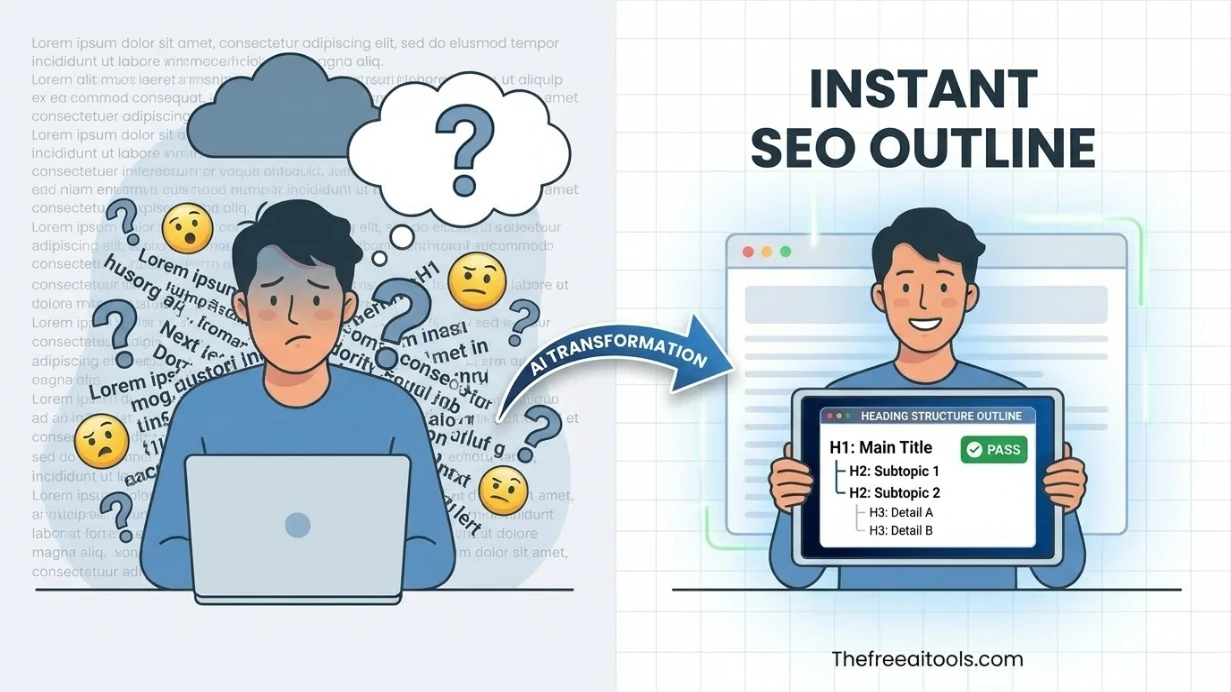
Audit pasted HTML for heading order, skipped levels, and document outline clarity — accessibility and SEO check.

Create consistent UTM URLs, validate naming conventions, and catch messy campaign tagging before links go live. It helps marketing teams keep analytics cleaner across channels and stakeholders.

Create QR codes for URLs, text, WiFi credentials, and email with one-click download — instantly in your browser.

Look up DNS records (A, MX, TXT, NS, CNAME) for any domain — check propagation and diagnose email issues.

Check SSL certificate validity, expiry, and HTTPS status for any domain — essential web security audit tool.

Find your IP address, geolocation, ISP, and country — what is my IP made simple with instant results.
Check a list of URLs and mark timeout or fetch failures — find and fix 404 errors on your website.
Visualize redirect chains from pasted crawl exports, response logs, or manually entered hops so teams can trim unnecessary redirects. This is useful during migrations, replatforms, and large-scale URL cleanup projects.

Estimate performance bottlenecks and Core Web Vitals from page metrics — lightweight Lighthouse simulator.
Local SEO in 2026 is the highest-ROI search channel for businesses with a physical presence or a defined geographic service area. While national organic search is increasingly competitive and expensive, local search results — the Google Maps pack, local organic listings, and voice search responses — are still winnable for small and medium businesses that apply the right technical optimizations. The free tools in this hub cover the technical foundation of local SEO: structured data, metadata, crawl configuration, and site performance.
LocalBusiness schema markup is the single most important technical local SEO implementation for any business with a physical address or service area. When correctly implemented, it provides Google with structured data about your business name, address, phone number, hours of operation, price range, and accepted payment methods — data that directly feeds the Google Knowledge Panel, map pack results, and voice search answers. The schema markup builder on this hub generates complete LocalBusiness JSON-LD that can be validated and deployed without hiring a developer.
Consistency across metadata and structured data is the foundation of local search trust signals. A business whose schema markup shows a different address from its meta description, whose sitemap excludes location pages, whose robots.txt accidentally blocks service area pages, and whose page speed scores poorly on mobile is sending mixed signals that reduce local ranking confidence. The tools on this hub work together to create consistency: generate schema, verify metadata, build the sitemap, check robots rules, test page speed — the complete local SEO technical audit in one browser session.
For multi-location businesses and agencies managing local SEO at scale, the hreflang generator and sitemap priority planner address the two most complex technical challenges: serving the right language and regional content to the right users, and ensuring that location pages receive appropriate crawl priority in the sitemap. These tools reduce the implementation time for enterprise local SEO configurations from hours of manual work to minutes of guided generation.
Quick answers about the workflow, privacy, and where this tool fits in a broader job.
Local SEO optimizes a business's online presence to appear in geographically relevant searches — 'plumber near me', 'best pizza in [city]', and Google Maps results. It involves local schema markup, location-specific metadata, consistent NAP (Name, Address, Phone) data, and Google Business Profile optimization alongside standard technical SEO.
LocalBusiness schema is the most critical structured data type for local SEO. It communicates your business name, address, phone number, opening hours, and service area to search engines in a machine-readable format that enables rich results and map pack eligibility.
For businesses with location pages in multiple languages or serving multiple countries, hreflang tags signal to Google which version of a page to show for which geographic audience. The hreflang generator produces correctly formatted tag sets without manual coding.
Google uses Core Web Vitals as a ranking factor for all search results including local. Mobile page speed is especially critical for local searches because the majority of 'near me' queries come from smartphones where slow pages cause immediate back-button bounces.
Use the QR code generator on this hub to create a scannable code linking directly to your Google Business Profile review page or website. QR codes on receipts, menus, and signage drive review volume, which is a direct local ranking factor.
The complete toolkit
Every tool runs instantly in your browser — no account, no download, no cost. Across 13 categories for everyday tasks.