
SEO Meta Tag Extractor
Inspect pasted HTML for title, description, canonical, and social tags — audit any page's SEO meta structure.
This hub provides a complete free SEO audit toolkit for — covering metadata extraction, broken link detection, redirect chain analysis, structured data validation, crawl file review, page speed simulation, and accessibility checks — all browser-based with no signup.
Updated · Reviewed by The Free AI Tools Editorial Team — SEO audit tools and site health review
Inspect pasted HTML for title, description, canonical, and social tags — audit any page's SEO meta structure.

Check a list of URLs and mark timeout or fetch failures — find and fix 404 errors on your website.
Visualize redirect chains from pasted crawl exports, response logs, or manually entered hops so teams can trim unnecessary redirects. This is useful during migrations, replatforms, and large-scale URL cleanup projects.

Generate valid JSON-LD for articles, organizations, products, FAQs, and local businesses with instant preview and rule checks. It helps SEO teams ship structured data faster without copy-pasting uncertain snippets.

Generate XML sitemaps from a list of URLs — set priorities, change frequencies, and download instantly.

Assign sitemap priorities and change frequencies to a URL inventory — generate XML sitemap attributes.

Create robots.txt files for your website — control search engine crawlers, disallow paths, and set sitemaps.

Estimate performance bottlenecks and Core Web Vitals from page metrics — lightweight Lighthouse simulator.

Create canonical link tags for pages, product variants, and paginated URLs — prevent duplicate content issues.

Generate hreflang link tags for multilingual and multi-region sites — correct international SEO targeting.

Turn pasted URL and link-export data into a visual internal-link graph to spot orphaned pages, weak clusters, and overlinked nodes. It helps SEO teams plan site structure without sending crawl exports to an outside tool.

Generate SEO-friendly meta tags including Open Graph, Twitter Card, and canonical tags — copy-ready HTML with live preview.
Review meta descriptions for character length and snippet-friendly ranges — bulk SEO meta audit tool.
Preview title tags, URLs, and meta descriptions in a Google-style search result layout — SEO snippet tool.

Turn page titles into clean, readable, SEO-friendly URL slugs — remove stop words and special characters.

Analyze repeated phrases and top keywords inside any text block — optimize content for search rankings.

Estimate Flesch-Kincaid readability and sentence complexity from text — optimize content grade level instantly.

Preview how Open Graph titles, descriptions, and images appear when shared on social media — OG tag tester.

Validate Twitter Card meta tags and preview card-style output — test X/Twitter link sharing appearance.
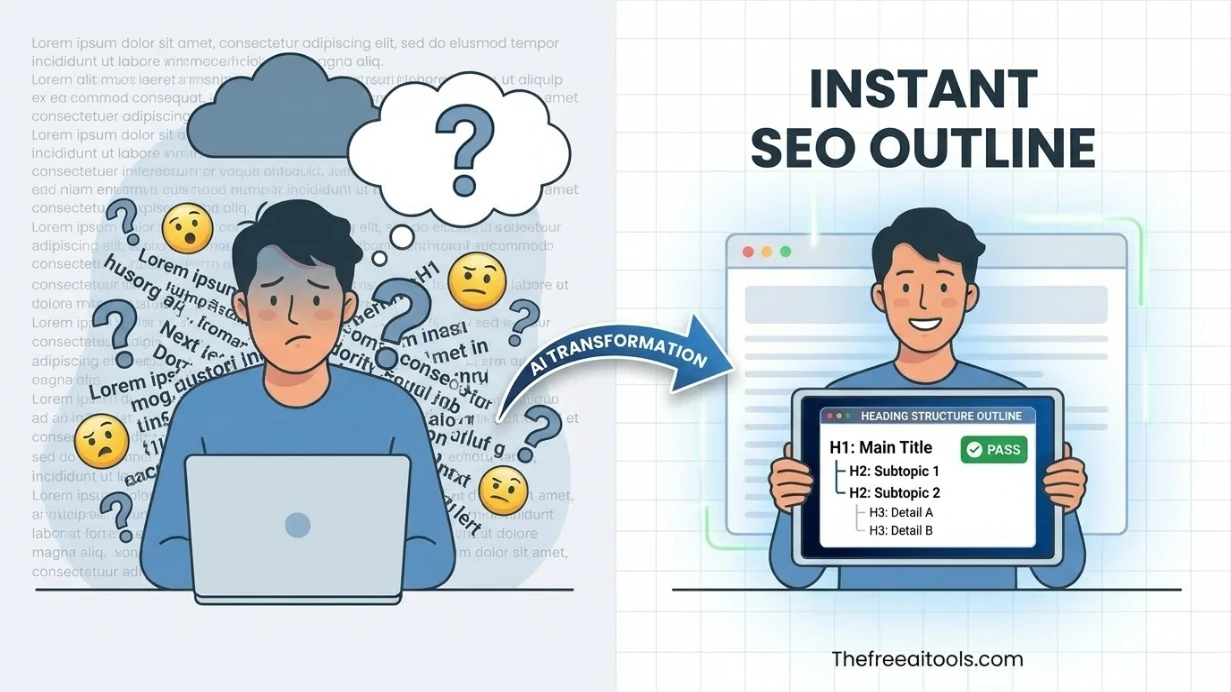
Audit pasted HTML for heading order, skipped levels, and document outline clarity — accessibility and SEO check.
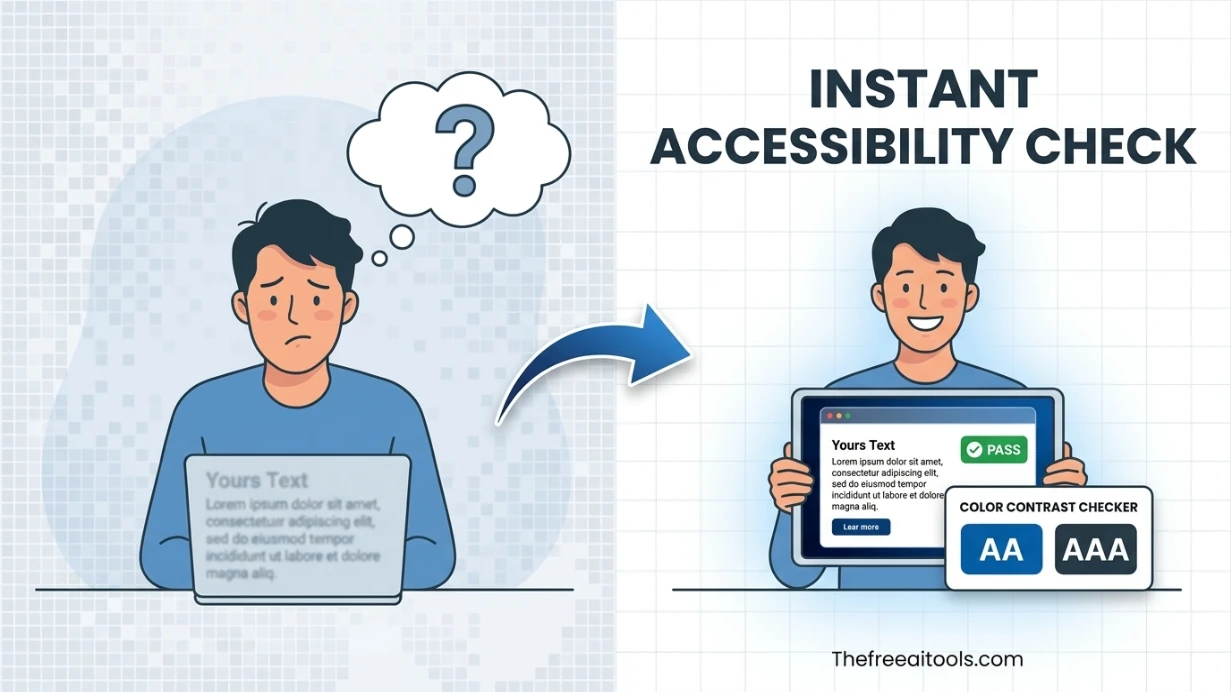
Check foreground and background color contrast against WCAG AA and AAA thresholds — accessibility audit tool.

Review image alt text for length, clarity, duplication, and decorative-image handling. It helps content teams write accessible image descriptions without relying on AI or third-party APIs.
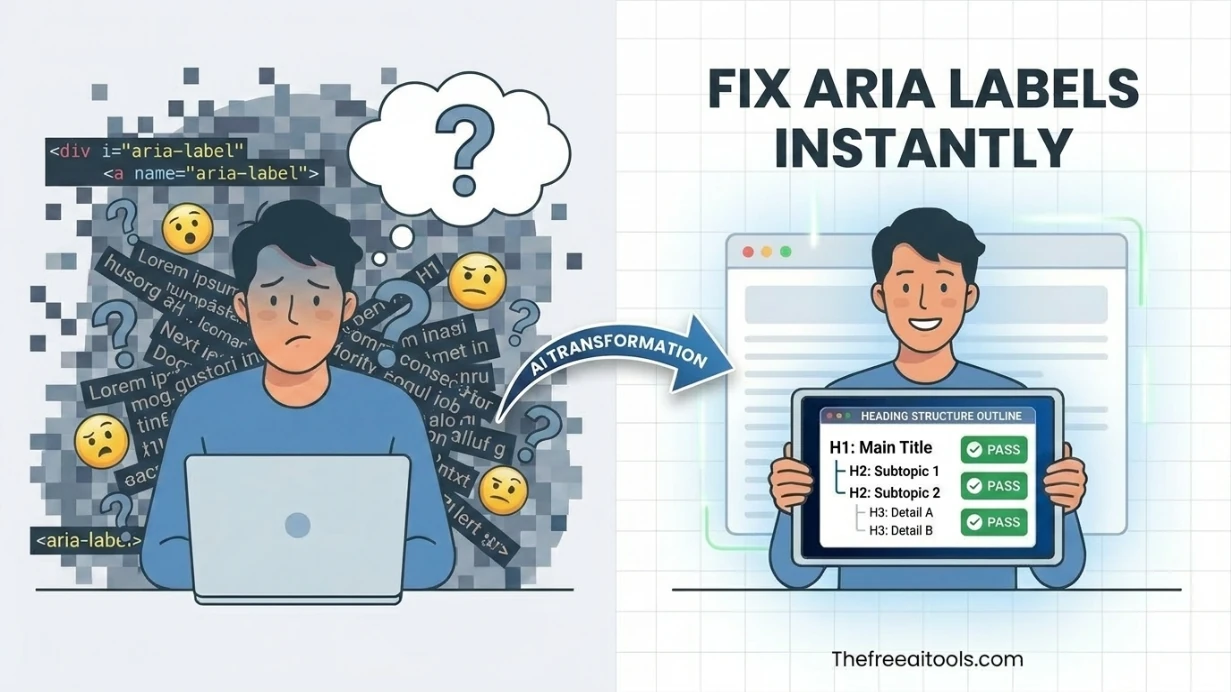
Review interactive elements for missing accessible names and weak ARIA labeling — screen reader audit.
List focusable controls, tabindex order, and skip-link coverage from pasted markup — keyboard navigation audit.

Check SSL certificate validity, expiry, and HTTPS status for any domain — essential web security audit tool.

Look up DNS records (A, MX, TXT, NS, CNAME) for any domain — check propagation and diagnose email issues.

Find your IP address, geolocation, ISP, and country — what is my IP made simple with instant results.

Create consistent UTM URLs, validate naming conventions, and catch messy campaign tagging before links go live. It helps marketing teams keep analytics cleaner across channels and stakeholders.

Extract a color palette from pasted CSS or HTML color values — build brand color systems instantly.

Parse browser, operating system, and device details from user agent strings — useful for analytics debugging.
A free SEO audit in 2026 does not require a $500/month enterprise crawling platform. The browser-based tools in this hub cover every layer of a professional SEO audit — technical configuration, on-page optimization, structured data, social metadata, performance, and accessibility — in a workflow that any site owner, content manager, or developer can complete without specialist training. The key is running the right checks in the right sequence, which is exactly what this hub is organized to support.
The SEO meta extractor is the fastest starting point for any site audit. Enter a URL and it returns the complete metadata profile: title tag content and length, meta description content and length, canonical URL, robots meta directives, Open Graph tags, Twitter Card data, and H1 content. In thirty seconds you have a complete picture of what Google sees when it crawls that page, and you can immediately identify discrepancies between what the page is supposed to communicate and what it actually communicates in its metadata.
Broken link detection is an audit step that most site owners run too infrequently. Links that returned valid responses when they were created gradually break as external sites restructure, pages get deleted, and domains expire. Every broken outbound link is a negative user experience signal. Every broken internal link is a missed opportunity to pass PageRank between pages. The broken link checker on this hub identifies both types systematically so they can be fixed or removed in a single editing session.
Accessibility auditing and SEO auditing have converged significantly in 2026. The heading structure analyzer, alt text length checker, color contrast checker, and ARIA label reviewer are all tools that appear on both accessibility checklists and technical SEO checklists. Google's crawlers evaluate heading hierarchy the same way screen readers do — as a signal of content organization and topical structure. Alt text is evaluated as image content description by both assistive technology and image search indexing. Running an accessibility audit and an SEO audit simultaneously using the tools on this hub is not just efficient — it is the correct technical approach.
Quick answers about the workflow, privacy, and where this tool fits in a broader job.
A complete SEO audit in 2026 covers six areas: technical health (robots.txt, sitemap, SSL, DNS, redirects), on-page optimization (metadata, headings, keyword density, readability), content quality (AI content checks, humanization, readability scores), structured data (schema markup validation), social optimization (Open Graph, Twitter Cards), and accessibility compliance (contrast, focus order, alt text, ARIA labels).
Run a full technical SEO audit quarterly, an on-page audit every time you publish or update significant content, and a metadata audit before any major campaign or site migration. The tools on this hub are fast enough to make frequent auditing practical.
Start with the SEO meta extractor on any key pages to surface metadata issues immediately, then check the robots.txt to confirm no important pages are blocked from crawling. These two checks catch the most damaging issues that consistently go undetected.
Yes. The SEO meta extractor, open graph preview, SERP snippet preview, and redirect chain mapper all work on any publicly accessible URL — your own or a competitor's. This makes competitive SEO analysis fast and free.
Accessibility and SEO share significant technical overlap. Heading structure, image alt text, and crawlable link text are both accessibility requirements and SEO signals. Google's quality guidelines increasingly align with accessibility standards — fixing accessibility issues typically improves SEO performance simultaneously.
The complete toolkit
Every tool runs instantly in your browser — no account, no download, no cost. Across 13 categories for everyday tasks.