
Meta Tags Generator
Generate SEO-friendly meta tags including Open Graph, Twitter Card, and canonical tags — copy-ready HTML with live preview.
This hub collects the best free browser-based SEO and developer tools for Laravel application developers in — covering metadata generation, crawl file creation, structured data, technical SEO validation, and JSON utilities — all no-signup.
Updated · Reviewed by The Free AI Tools Editorial Team — Laravel development and SEO tools review
Generate SEO-friendly meta tags including Open Graph, Twitter Card, and canonical tags — copy-ready HTML with live preview.

Create robots.txt files for your website — control search engine crawlers, disallow paths, and set sitemaps.

Generate XML sitemaps from a list of URLs — set priorities, change frequencies, and download instantly.

Create canonical link tags for pages, product variants, and paginated URLs — prevent duplicate content issues.

Generate valid JSON-LD for articles, organizations, products, FAQs, and local businesses with instant preview and rule checks. It helps SEO teams ship structured data faster without copy-pasting uncertain snippets.

Format, validate, and minify JSON with error highlighting — instantly beautify messy JSON responses.

Generate JSON Schema from sample payloads, validate example objects, and inspect required fields or type mismatches. It is useful when teams need portable contracts without spinning up a backend.

Decode and inspect JSON Web Tokens to view header, payload, and signature structure — essential for API debugging.

Create HS256 JWT tokens from a payload, headers, and secret — test auth flows without a backend.

Encode and decode text to and from Base64 format instantly in your browser — essential developer utility.
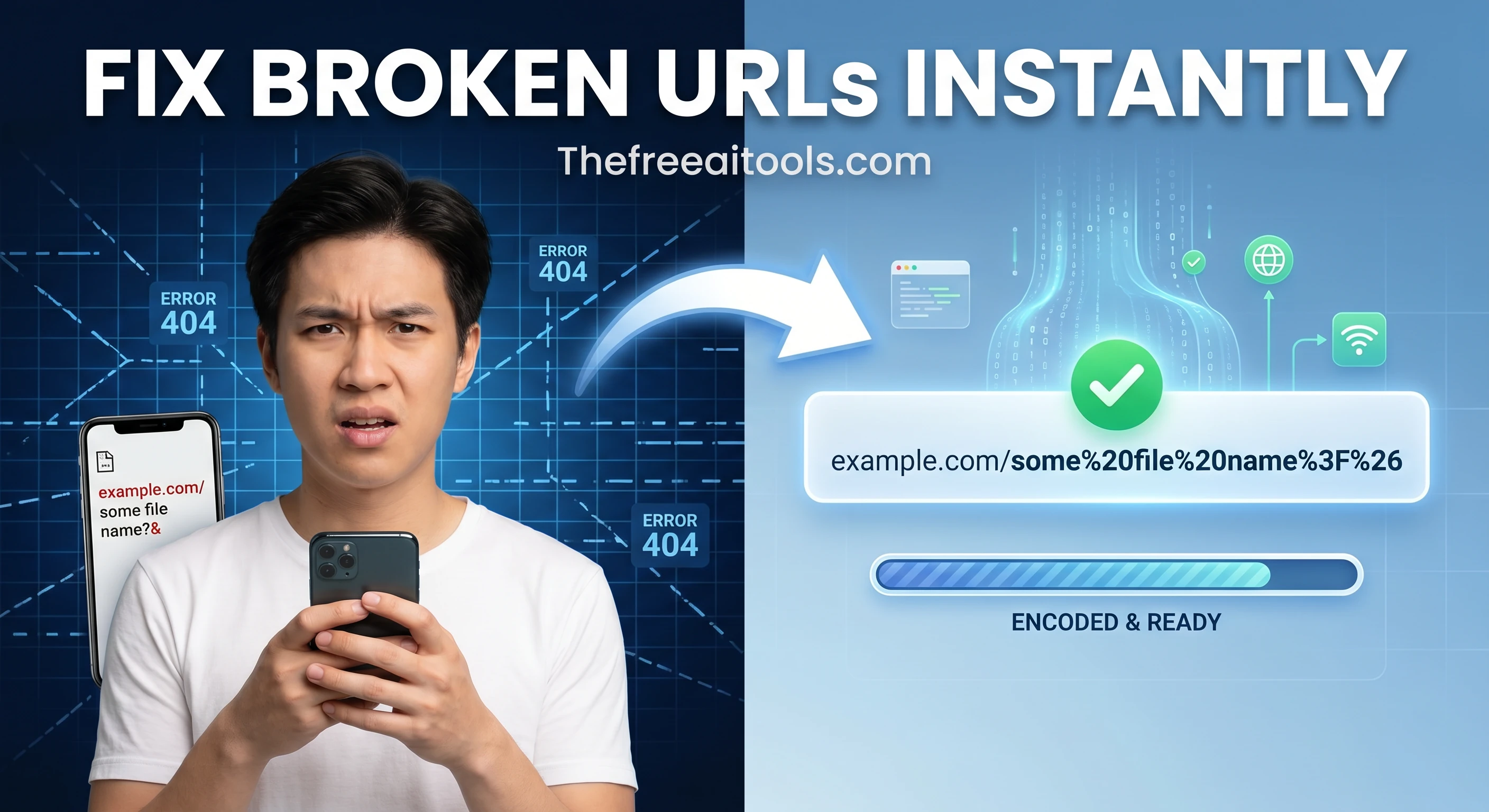
Encode and decode URLs with percent-encoding support — fix broken query strings and API parameters instantly.

Parse .env file content into structured JSON and key/value tables — debug dotenv configs instantly.

Turn page titles into clean, readable, SEO-friendly URL slugs — remove stop words and special characters.

Preview title tags, URLs, and meta descriptions in a Google-style search result layout — SEO snippet tool.

Review meta descriptions for character length and snippet-friendly ranges — bulk SEO meta audit tool.

Visualize redirect chains from pasted crawl exports, response logs, or manually entered hops so teams can trim unnecessary redirects. This is useful during migrations, replatforms, and large-scale URL cleanup projects.

Generate hreflang link tags for multilingual and multi-region sites — correct international SEO targeting.

Create and compare common hash outputs for text input instantly - useful for checksums and integrity checks.
Generate and compare bcrypt hashes in one browser-based workspace - secure password hashing with no server upload.

Test regular expressions with live match highlighting — debug patterns instantly with flags, groups, and capture support.

Validate cron schedules and preview upcoming run times — debug cron jobs and scheduled task expressions.

Render markdown into clean sanitized HTML with a live preview — convert .md files to web-ready markup.

Compare two blocks of text and highlight additions and removals — visualize code and content changes instantly.
Laravel SEO implementation in 2026 is handled at the application layer — PHP controllers, Blade template partials, middleware, and service providers all play roles in generating correct metadata, structured data, and crawl configuration for Laravel-powered sites. The free tools in this hub serve two complementary functions for Laravel developers: generating the correct SEO markup that gets implemented in the application, and providing the developer utilities that support the broader Laravel development workflow.
Dynamic metadata generation is a core Laravel SEO requirement. Unlike static sites where metadata is hardcoded, Laravel applications generate titles, descriptions, and canonical URLs dynamically based on database content, user context, and URL parameters. The meta tag generator on this hub helps developers prototype the correct HTML structure for each metadata type, which is then translated into Blade template syntax and populated with Laravel model data. The SERP snippet preview validates that the dynamic values fit within Google's display limits for the most important page types in the application.
Sitemap generation in Laravel requires building a controller that queries the database for all indexable URLs, formats them as XML, and serves them with the correct content-type header. The sitemap generator on this hub produces correctly structured XML that Laravel developers can use as a template, adapting the URL set to their specific routing and model structure. For sites with more than 50,000 URLs, the sitemap priority planner helps developers think through how to weight different content types in the sitemap index.
The developer utility tools on this hub are directly applicable to Laravel's day-to-day development workflow. JSON formatting is constant in Laravel API development — formatting API responses, config files, and test fixtures. The bcrypt tool validates Laravel's password hashing output. The JWT decoder inspects tokens generated by Laravel Passport or Sanctum for authentication debugging. The cron parser decodes the scheduling expressions used in Laravel's task scheduler. The env parser helps review .env configuration without terminal access. These tools collectively reduce the context switching that fragments Laravel development sessions.
Quick answers about the workflow, privacy, and where this tool fits in a broader job.
Use the meta tag generator on this hub to prototype the correct meta tag HTML structure for each page type. In Laravel, pass metadata as variables from controllers to Blade templates and render them in the layout's head section.
The sitemap generator produces correctly formatted XML sitemap markup. For dynamic Laravel applications, use the generated structure as a template for a sitemap controller that queries your database to build the URL list dynamically.
The JWT decoder inspects Laravel Passport or Sanctum tokens by decoding the header, payload, and signature without transmitting the token to any external server — useful for debugging auth issues in development.
The environment file parser reads Laravel's .env file format and displays variable key-value pairs in a structured table, making it easy to review configuration without cat-ing the file in a terminal.
Laravel's task scheduler uses cron expression syntax. The cron parser decodes complex cron expressions into plain English descriptions and shows the next scheduled execution times — essential for verifying that scheduled jobs run at the correct frequency.
The complete toolkit
Every tool runs instantly in your browser — no account, no download, no cost. Across 13 categories for everyday tasks.